Crochet Guide · KnitAddict Journal
A Beginner’s Guide to Crochet Granny Squares
Timeless, colorful, and beginner-friendly — granny squares are the heart of modern and vintage crochet. Here’s everything you need to know to start your first square with confidence.

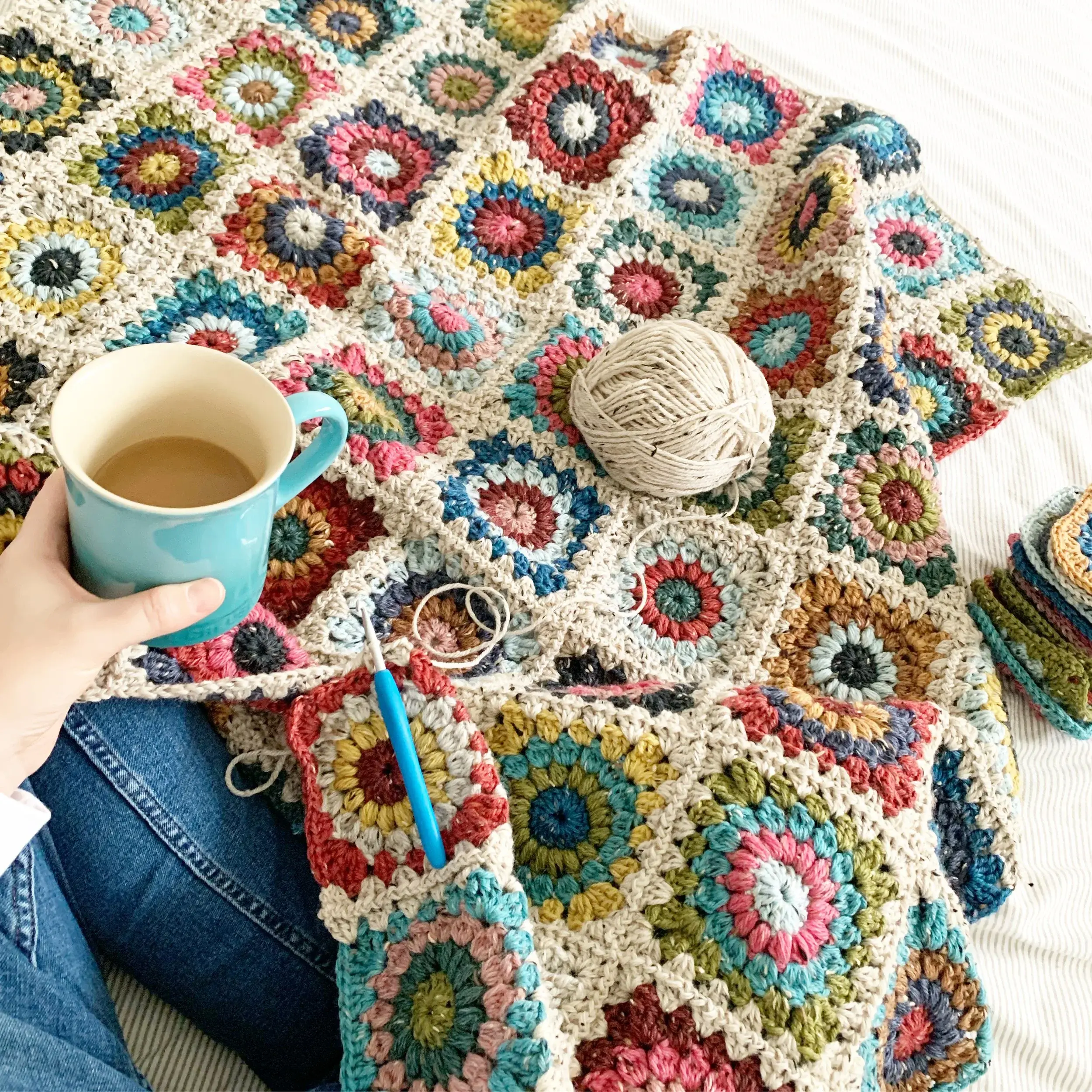
Granny squares are one of the most iconic crochet motifs — charming, versatile, and endlessly customizable. From blankets and bags to tops and cardigans, these little squares can become almost anything.
If you’re new to crochet, granny squares are the perfect place to start. They’re quick to make, easy to practice, and a beautiful way to experiment with color combinations.
1. What Makes Granny Squares So Special?
Classic granny squares are built from the center outward, usually in repeating rounds of clusters. This makes them beginner-friendly and forgiving — you can practice your tension, your stitches, and your color changes without starting over.
They’re also portable. You can make one square at a time wherever you are, then join them later into a finished piece.
“No two granny squares are ever the same — each one carries its own personality, story, and charm.”
2. Best Yarn for Granny Squares
Most granny squares look best with yarn that holds its shape but still feels soft. Here are popular choices:
Cotton
Cotton yarn gives crisp stitch definition and a clean, structured look. Perfect for bags, coasters, and summer tops.
Acrylic
Affordable, lightweight, and easy to wash — acrylic is ideal for blankets and large projects where durability matters.
Wool or Wool Blends
Warm and cozy. Great for sweaters and winter accessories. Wool blends add softness and flexibility without losing structure.
3. Hook Size Matters
For granny squares, your hook size affects the stitch texture:
- Smaller hook: tighter stitches, more structure
- Larger hook: softer drape, more open texture
Beginners usually start with a 4 mm–5 mm hook paired with DK or worsted-weight yarn. This combo is comfortable, forgiving, and easy to see as you learn.
4. Choosing Colors
Granny squares are famous for color play — from bold rainbow sets to soft minimal palettes. Here are some color ideas:
- Monochrome: one color in different shades
- Pastel trio: peach, lilac, mint (your brand colors!)
- Vintage warm tones: mustard, brown, cream
- High-contrast pop: navy + white + accent color
Try choosing 3–5 colors that complement each other — but don’t be afraid to experiment. The beauty of granny squares is that even unexpected combos look charming.
5. Anatomy of a Classic Granny Square
A traditional granny square is made of:
- The center ring
- Clusters (usually groups of 3 double crochets)
- Four corner spaces
- Repeating rounds that expand outward
Once you learn this basic structure, you can explore endless variations — flower motifs, sunburst squares, lace squares, and more.
6. Common Beginner Mistakes (and Fixes!)
Square is curling or wavy?
Try adjusting your tension or using a slightly larger hook.
Square looks uneven?
Make sure you place your stitches correctly in the corners — this is where most inconsistencies happen.
Colors look messy at the join?
Practice invisible joins or weave in ends as you go to keep everything neat.
Final Thoughts
Granny squares are endlessly charming — simple enough for beginners, creative enough for seasoned makers.
Whether you're crafting a nostalgic blanket, a trendy cardigan, or a tiny coaster, each square becomes a small piece of art in your hands.
Take your time, enjoy the colors, and have fun with the process. Before you know it, you’ll have a pile of squares ready to join into something beautiful.
Enjoyed this read?
Get more cozy stories, care guides, and behind–the–scenes notes straight to your inbox.
Join the newsletter